Server hosting vs. a store: what each does
Hosting runs your Minecraft server, a store sells and delivers ranks. What each one does, how they connect through a plugin or RCON, and what each costs.

Tanz
5 min read
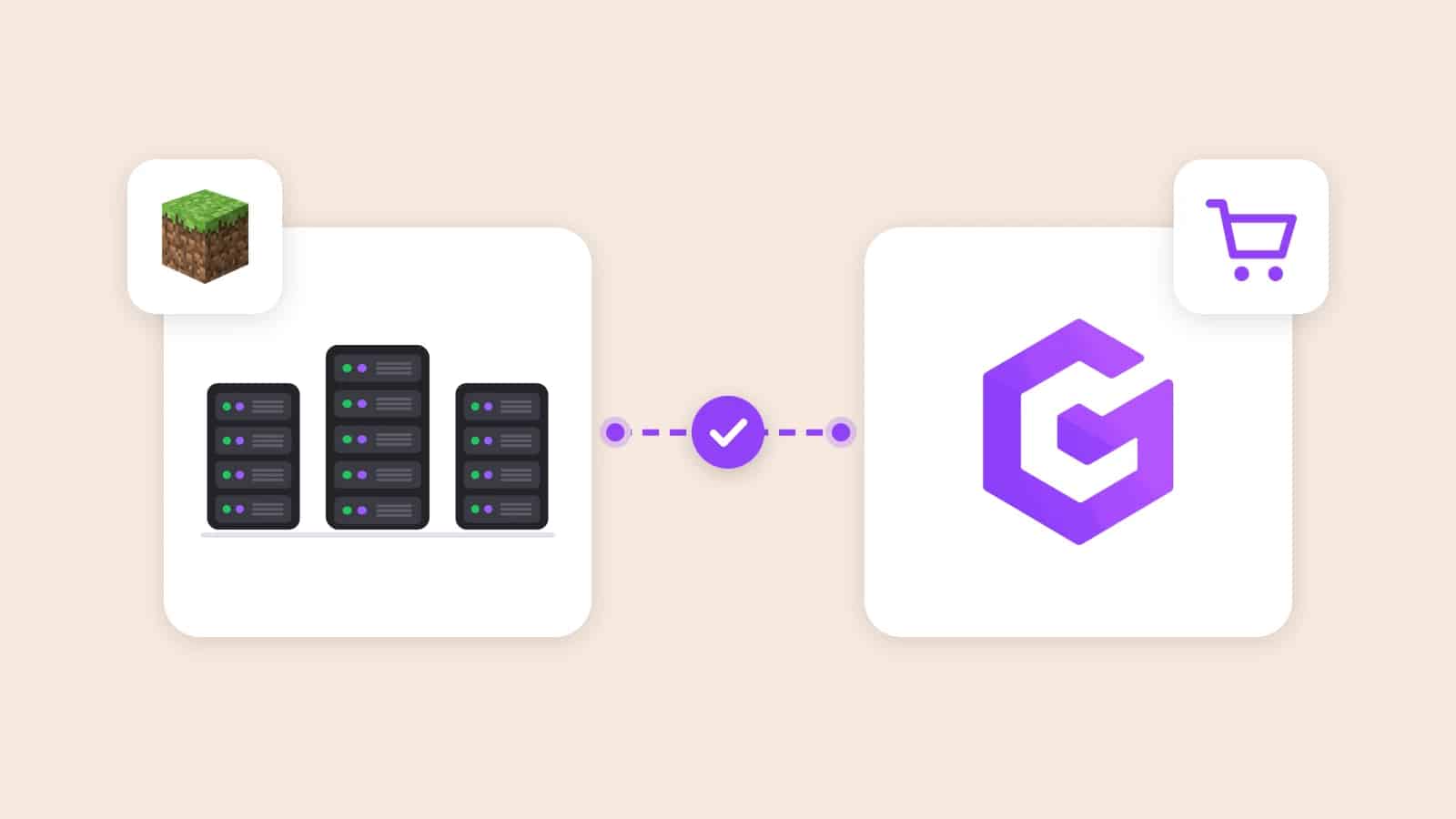
Hosting and a store solve different problems, and a server that sells ranks needs both. Hosting is the machine your Minecraft server runs on: it keeps the world loaded and accepts players who join by IP. A store is the website where players pick a rank and pay, and it then tells your server to run the delivery command. Your host doesn't sell anything, and your store doesn't run a server.
If you don't have a server yet, sort out hosting first. Add a store once you have something to sell. The two connect through a plugin or through RCON, and the rest of this guide covers each piece, where you're allowed to sell, and what it all costs.
What hosting does
A Minecraft server is just a program. For Java Edition it's the server .jar you download from minecraft.net, and for Bedrock it's the Bedrock Dedicated Server (BDS). Both are free. Java needs "a compatible version of Java installed". BDS runs on Windows 10 or Ubuntu 22.04 and later, and Mojang lists "at least 1 GB of RAM for small servers".
Hosting means keeping that program running on a machine that's online. Your options:
- Your own PC: free apart from electricity, but the server goes down when the PC does, and you'll need to forward a port on your router.
- A Minecraft host: a company rents you a machine with a control panel to start and stop the server, upload plugins and read the console. Plans are usually sold by RAM.
- A VPS or dedicated server: you rent a whole machine and set everything up yourself. More control, more work.
- Free hosting such as Aternos: no cost, with its own rules.
- Realms: Mojang's own subscription server for playing with friends.
There's no single best host. If you plan to sell, what matters is whether you can install plugins, whether the server stays online, and whether the host's terms allow commercial use. More on that below.
What a store does
A store handles everything that happens outside the game when someone pays:
- It shows products and prices on a public page, before a player ever joins.
- It takes the payment by card, PayPal or another method, through the payment provider you connect.
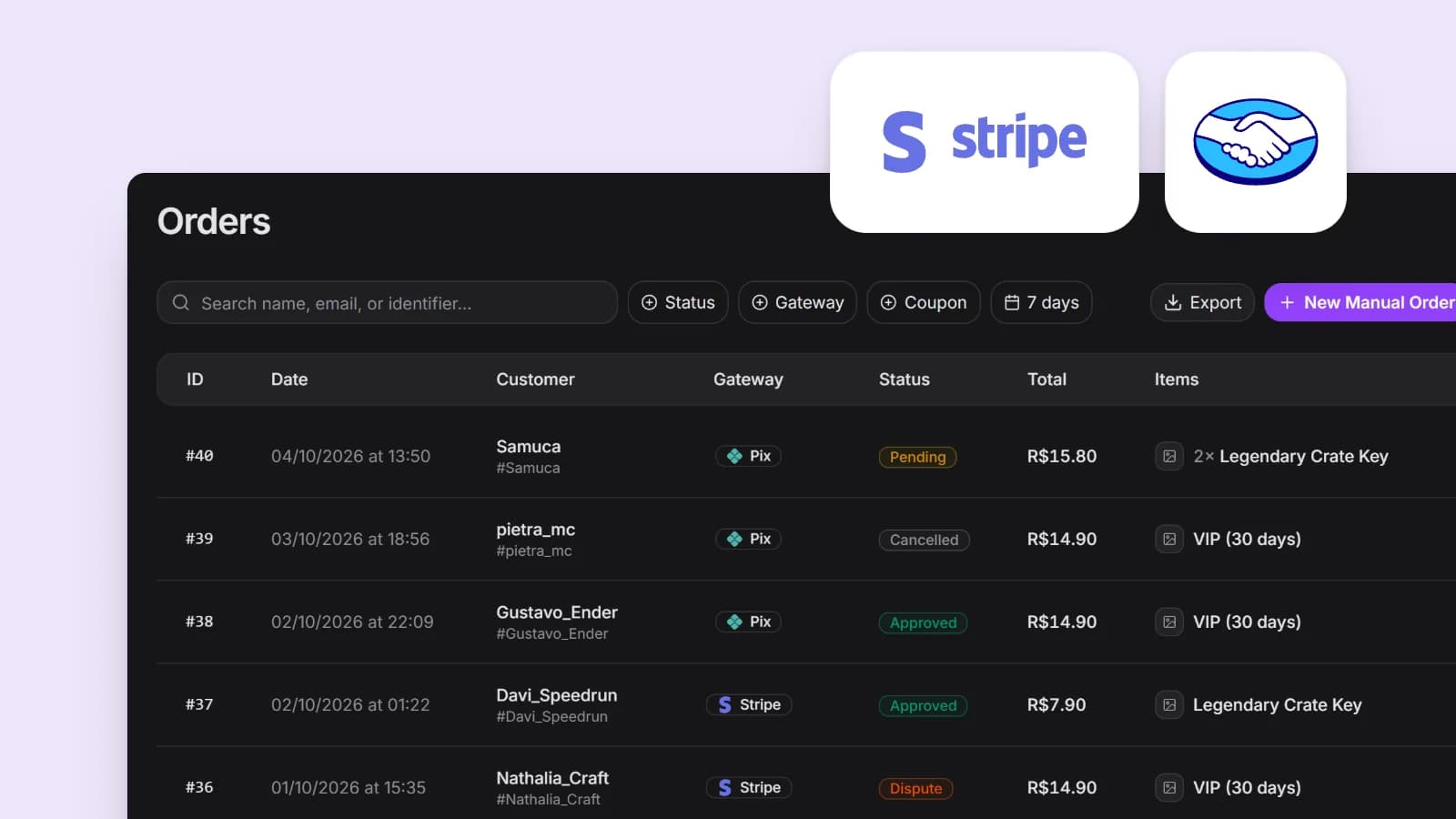
- It records the order: player name, product and amount.
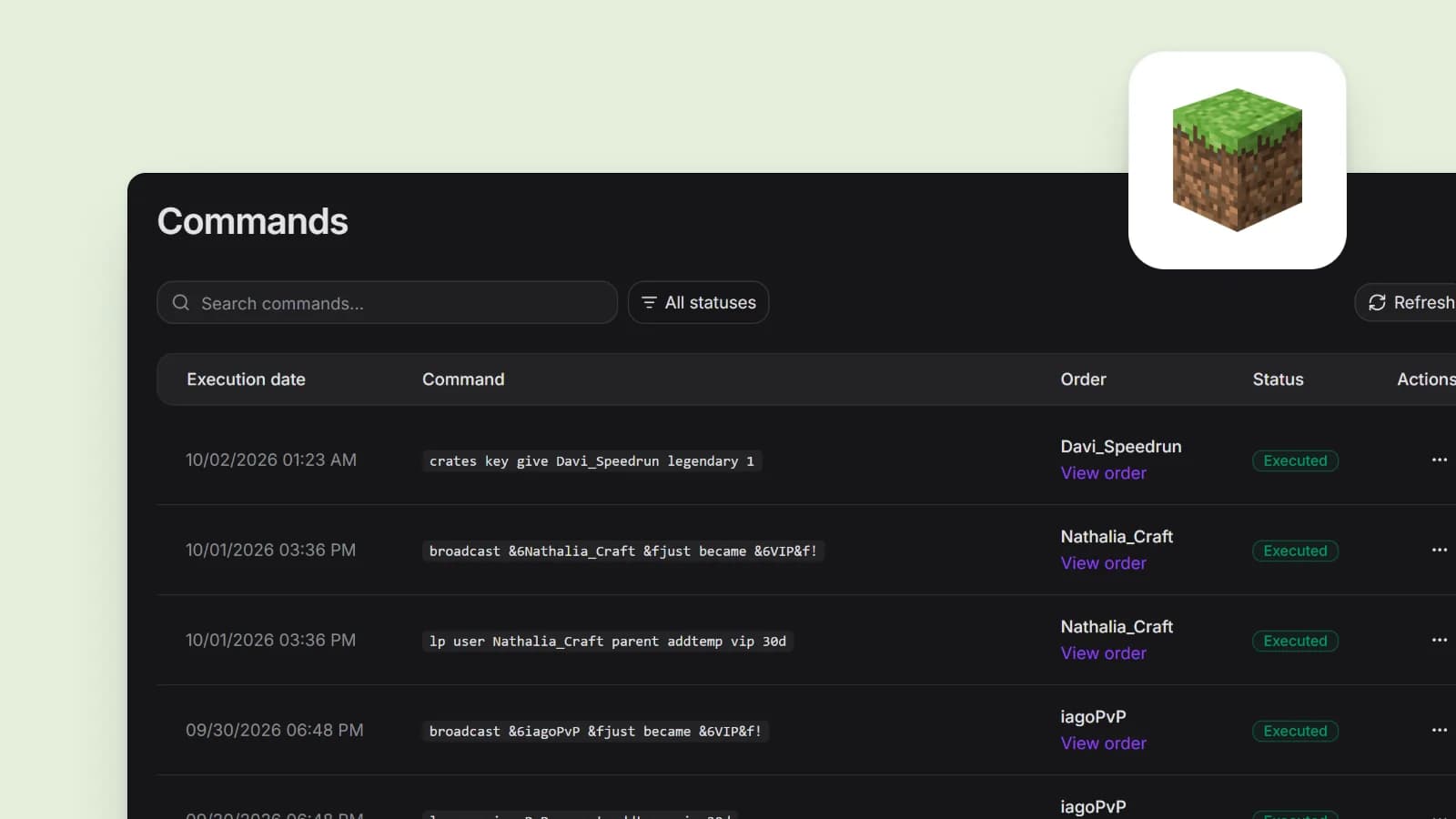
- It queues the product's command, such as
lp user {identifier} parent add vip, and your server runs it in the console. - It can run another command when a timed rank expires or a payment is disputed.
You can do all of this by hand over Discord DMs, but then every sale waits for a staff member to be online. How to create a store for your game server walks through the decisions before the technical part, and what you can sell on a Minecraft server covers Mojang's rules on charging players.
Hosting and a store side by side
| Hosting | Store | |
|---|---|---|
| What it is | The machine your server runs on | The website where players buy |
| What it does | Keeps the world, plugins and player connections running | Lists products, takes payment, sends the delivery command |
| Who pays whom | You pay the host | Players pay you |
| Without it | There's no server | You sell by hand, or not at all |
| Examples | Your PC, a Minecraft host, a VPS, Aternos, Realms | Gamecart, Tebex and others |
Where you can actually sell
Your host decides whether a store has anything to connect to, and sometimes whether you can charge at all.
Aternos. Aternos describes itself as "Free. Forever." and says "There is no possibility to pay for anything." Its terms of service are just as direct in section 5: "The commercial usage of our services is prohibited." The same section bans getting around the routine that stops servers with no active players. An Aternos server is fine for playing with friends or testing plugins, not for selling ranks.
Realms. You can't install mods or plugins on a Realm, according to the Minecraft Wiki, so there's nowhere to put a store's connector. The Realms page also shows what it's built for: Realms for Java Edition is $7.99 a month for you plus 10 other players at the same time.
A paid host, a VPS or your own machine. This is where a store works. Before you sign up, check the host's terms for rules about servers that charge players, and make sure the panel lets you upload files to the plugins/ folder.
Warning
Breaking a host's terms can cost you the whole server, not just the store. Aternos's terms say a violation can lead to "deletion or suspension of your account and all related servers and data", and that server data is deleted 7 days after a suspension.
How the store reaches your server
There are two ways in, and your host has to allow at least one.
A connector plugin. You drop a JAR into plugins/ (or mods/ on Fabric) and paste your store's token into its config. The plugin pulls commands from the store over HTTPS, so you don't open any port. Gamecart's Minecraft connector has builds for Paper, Spigot, Purpur and Folia from 1.8.8, BungeeCord, Velocity and Fabric. If your host lets you upload plugins, start here.
RCON. The server opens a remote console port, and the store connects to it to run commands. In server.properties that's enable-rcon=true, rcon.password and rcon.port, which defaults to 25575 according to the Minecraft Wiki. It's useful on vanilla servers or when you can't install plugins, but the port has to be reachable from the internet, and not every host allows that.
Warning
The same wiki page warns that RCON "is not encrypted", so everything sent over it, the password included, can be intercepted. If you use RCON, pick a long, unique password and, if your host allows it, only open the port to your store's address.
Both methods need the server to be running. In Gamecart, a command that hasn't been delivered yet sits in the queue as Scheduled until the plugin picks it up. A host that shuts the server down when it's empty will delay delivery for anyone who buys from the website. Rank commands, offline players and testing before launch are covered in how to deliver ranks automatically on Minecraft.
What about Bedrock
Connectors built for Paper or Spigot are Java server plugins, so they don't run on the official BDS. You have two routes:
- A Java server with Geyser. Geyser lets Bedrock players join a Java server, and its Floodgate plugin lets them in without a Java account. Your store keeps talking to the Java server through the usual plugin. Gamecart works this way and builds the Bedrock player's name with your Floodgate prefix, as the Minecraft page explains.
- A plain BDS. Check that your store platform publishes its own add-on for BDS and that your host gives you access to the server files to install it. Gamecart has no BDS connector.
If you're choosing hosting for a Bedrock server you plan to monetize, pick the route first, because it changes what software the host has to run.
What each piece costs
| Piece | Cost | Where to check |
|---|---|---|
| Server software | Free, Java and Bedrock | minecraft.net |
| Free hosting | Free, no commercial use on Aternos | Aternos terms |
| Realms | $3.99 or $7.99 a month on Bedrock, $7.99 on Java | Realms page |
| Paid host or VPS | Depends on RAM, CPU and player count | Each host's plans page |
| Store | Depends on the platform | Each platform's pricing page |
| Payment provider | A fee on each sale | Your provider's pricing page |
Store pricing models vary a lot. Gamecart has a Free plan with no monthly fee and takes no commission on sales, and the pricing page lists Pro at $9.90 and Enterprise at $19.90 a month for US visitors. Whichever store you use, the payment provider charges its own fee on top.
Hosting is a fixed cost you pay whether or not anything sells. The store and the payment fees scale with sales. Add both up before you price your first rank.
Before you pick a host
If you plan to sell on the server, get answers to these five questions first:
- Do the host's terms allow a server that charges players?
- Can you upload a JAR to
plugins/ormods/from the panel? - If you need RCON, will the host open the port?
- Does the server stay online when nobody is playing?
- Does it run the software you need: Paper or Spigot, a proxy such as Velocity, Fabric, or BDS?
With those answers, picking a store with a connector for your setup is the easy part.
Sources

About the author
Tanz
Founder of Gamecart, the store platform for Minecraft, Hytale, FiveM, and other game servers.
Open your server store
Create a free Gamecart store, connect your server, and deliver purchases automatically.