How to structure and price server ranks
A method for pricing server ranks: start from your monthly costs, decide what each tier includes, choose monthly or permanent, and test one change at a time.

Tanz
6 min read
Work out what the server costs you each month and how much you want to bring in, then build two or three rank tiers that each add something players can see, decide whether they last 30 days or forever, and check that the math works with the player count you actually have. A price list copied from a bigger server skips every one of those steps.
There is no correct price for a rank. Every number in this guide is a made-up example to show the method, not a market benchmark.
Add up what the server costs
List what leaves your pocket in a normal month:
- the machine or VPS hosting;
- paid plugins, with each price spread over the months you expect to use it;
- the domain, DDoS protection and other subscriptions;
- whatever you pay staff, if you pay anyone (builders, moderators, a developer).
Your own time counts too, even if it never shows up in a spreadsheet. If you spend ten hours a week on tickets and events, decide whether the goal should cover that or whether the server is a hobby.
Then add a reserve for things that are not monthly: a new plugin, an event with prizes, a month of advertising. Costs plus reserve is your monthly goal.
Last, leave a margin for money that never reaches you: your payment provider's fee (check its pricing page) and the occasional refund.
Decide what each rank includes
On a Minecraft server, the rules limit what a rank can contain. The Minecraft Usage Guidelines allow "Selling entitlements that affect gameplay provided they don’t ruin other players’ experience or give a competitive advantage in the game". Cosmetics are allowed too, except capes.
In practice, a rank that stays on the safe side is made of looks and convenience: a chat tag and color, particles, extra homes, /hat, a building kit. Better PvP gear or a money multiplier in an economy where players compete tend to cross the line. The post on what you can sell on a Minecraft server goes through each case.
That changes how you think about price. If a rank can't sell winning, players pay for identity, comfort and for supporting the server. The value they see comes from how often they use the perks and how visible those perks are to everyone else.
The same guidelines ask you to provide "information to users on all the content and pricing applicable to your server before a person joins, signs up, or signs in". A public store page with the tier table covers that and doubles as your shop window.
How many tiers
Start with two or three. Each tier needs a difference you can state in one line: "VIP+ has everything in VIP, plus particles and 6 homes." When tier three and tier four differ by a command nobody uses, players give up comparing. Every extra tier is also one more permission group to review after each plugin update.
A simple ladder, as an example:
| Tier | What it adds | Role in the store |
|---|---|---|
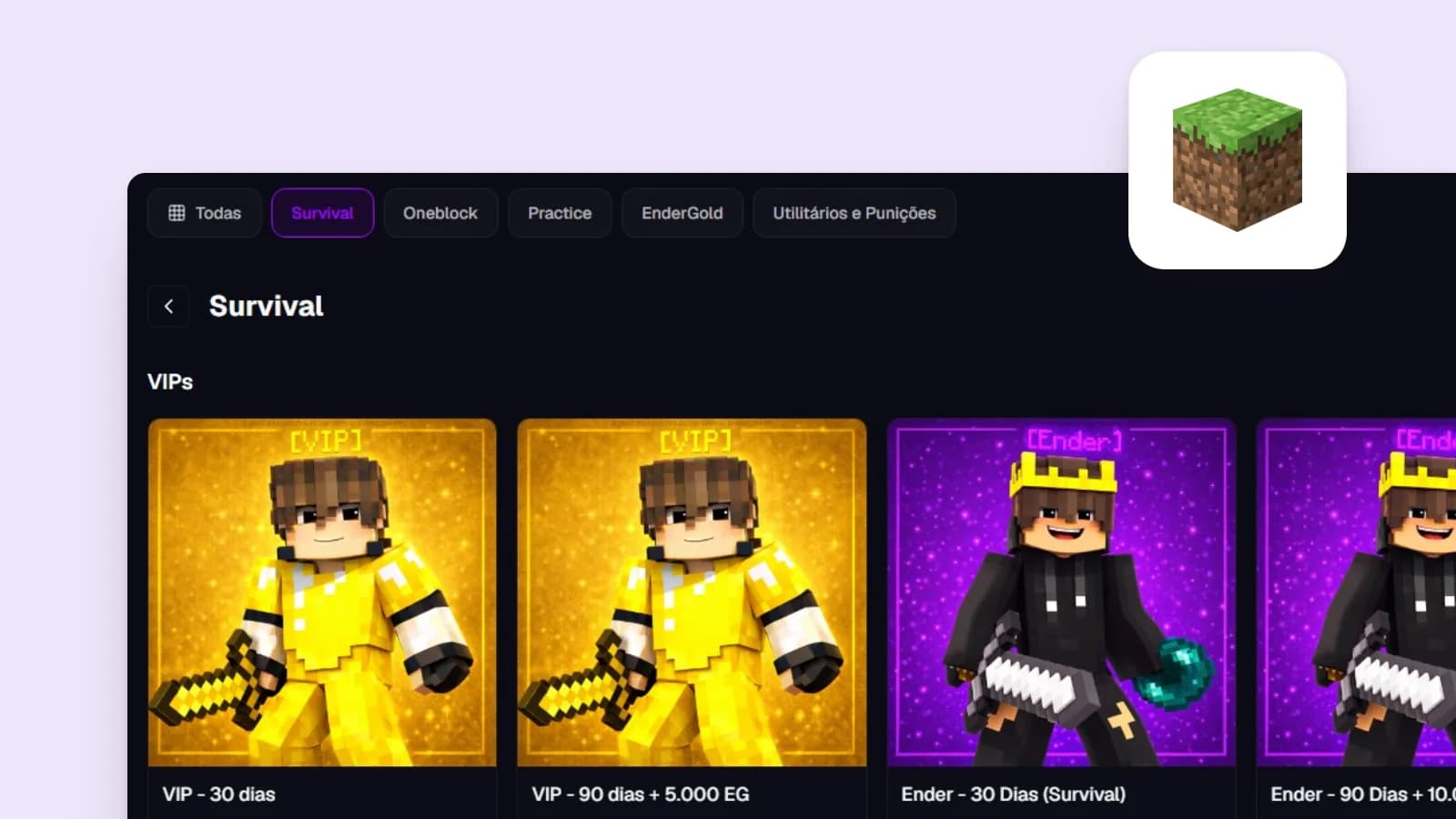
| VIP | Chat tag and color, 3 homes, /hat | Entry point: a low price for players who want to chip in |
| VIP+ | Everything in VIP, particles, 6 homes, weekly building kit | The tier you want most buyers to pick |
| MVP | Everything in VIP+, a pet and a lobby join message | For players who want every cosmetic |
In LuckPerms, create the groups with increasing weights, such as lp creategroup vip 100 and lp creategroup vipplus 200. When a player has two groups and their permissions conflict, the higher weight wins. Then make each tier inherit the one below: lp group vipplus parent add vip gives vipplus everything vip has, so you only configure what is new.
Monthly or permanent
A 30-day rank brings recurring revenue, but only while players keep renewing. A permanent rank pays once per player: once your regulars own it, sales depend on new players arriving.
A permanent rank is also a promise. If you wipe the server or start new seasons, write in the product description what happens to existing owners before you sell the first one.
One way to price a permanent rank is to decide how many months of the monthly rank it replaces. If you think a loyal player would renew for about eight months, eight times the monthly price is a starting point.
How the delivery command expresses it
With LuckPerms, the difference between monthly and permanent lives in the command your store runs on the server:
| Type | Command |
|---|---|
| 30 days | lp user {identifier} parent addtemp vip 30d accumulate |
| Permanent | lp user {identifier} parent add vip |
parent addtemp adds the group with an expiry, and LuckPerms removes it when the time runs out. The accumulate modifier adds any time left on the existing group to the new duration, as the LuckPerms documentation describes, so a player who renews early keeps their remaining days. parent add with no duration keeps the group for good.
{identifier} is the placeholder Gamecart replaces with the buyer's username. Other platforms use a different name for the same placeholder.
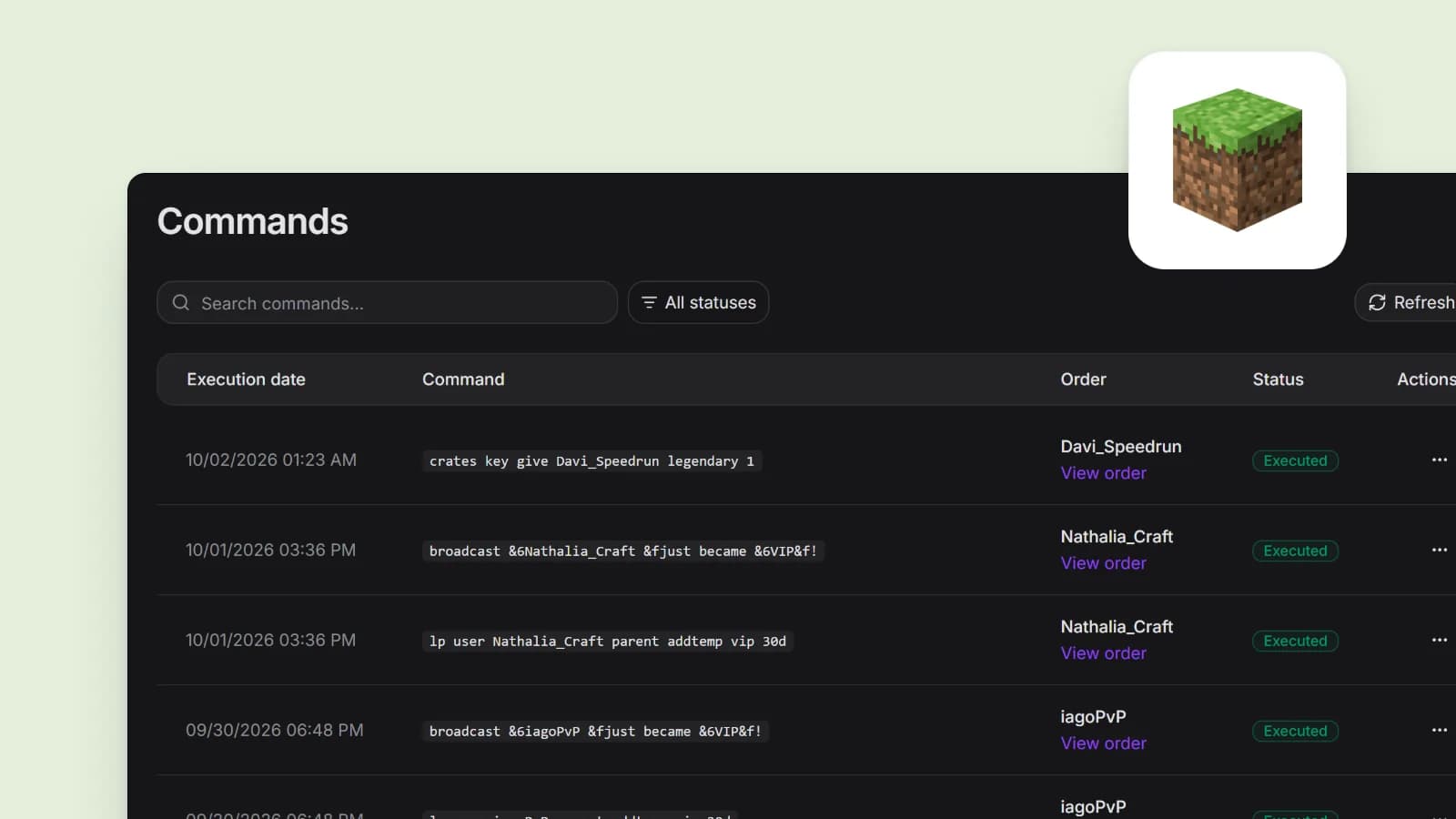
You can also let the store handle the expiry. In Gamecart, a product with a 30-day Duration can run lp user {identifier} parent add vip when the payment is approved and lp user {identifier} parent remove vip through the On Expiration trigger, described in the command setup guide. Pick one approach per product, never both. The full setup is in the guide to automatic rank delivery on Minecraft.
Upgrades between tiers
For permanent ranks, one option is an upgrade product priced at the difference. If VIP costs $40 and VIP+ costs $65, "Upgrade VIP to VIP+" costs $25 and runs two commands:
lp user {identifier} parent remove viplp user {identifier} parent add vipplus
The store has no way to know whether the buyer already owns VIP. Someone who buys the upgrade without it gets VIP+ for the difference. Say so in the description, then decide whether you check those orders by hand or accept the risk.
For monthly ranks, the simplest path is no upgrade product at all. The player buys VIP+ whenever they want and the old VIP runs out on its own. With the weights above, VIP+ takes precedence while both are active.
Which currency
Price in the currency your players think in. If most of them are in the US, that is dollars. Set the number from your own costs in that currency rather than converting a price from another market at today's exchange rate, because the rate moves and your store price stays put.
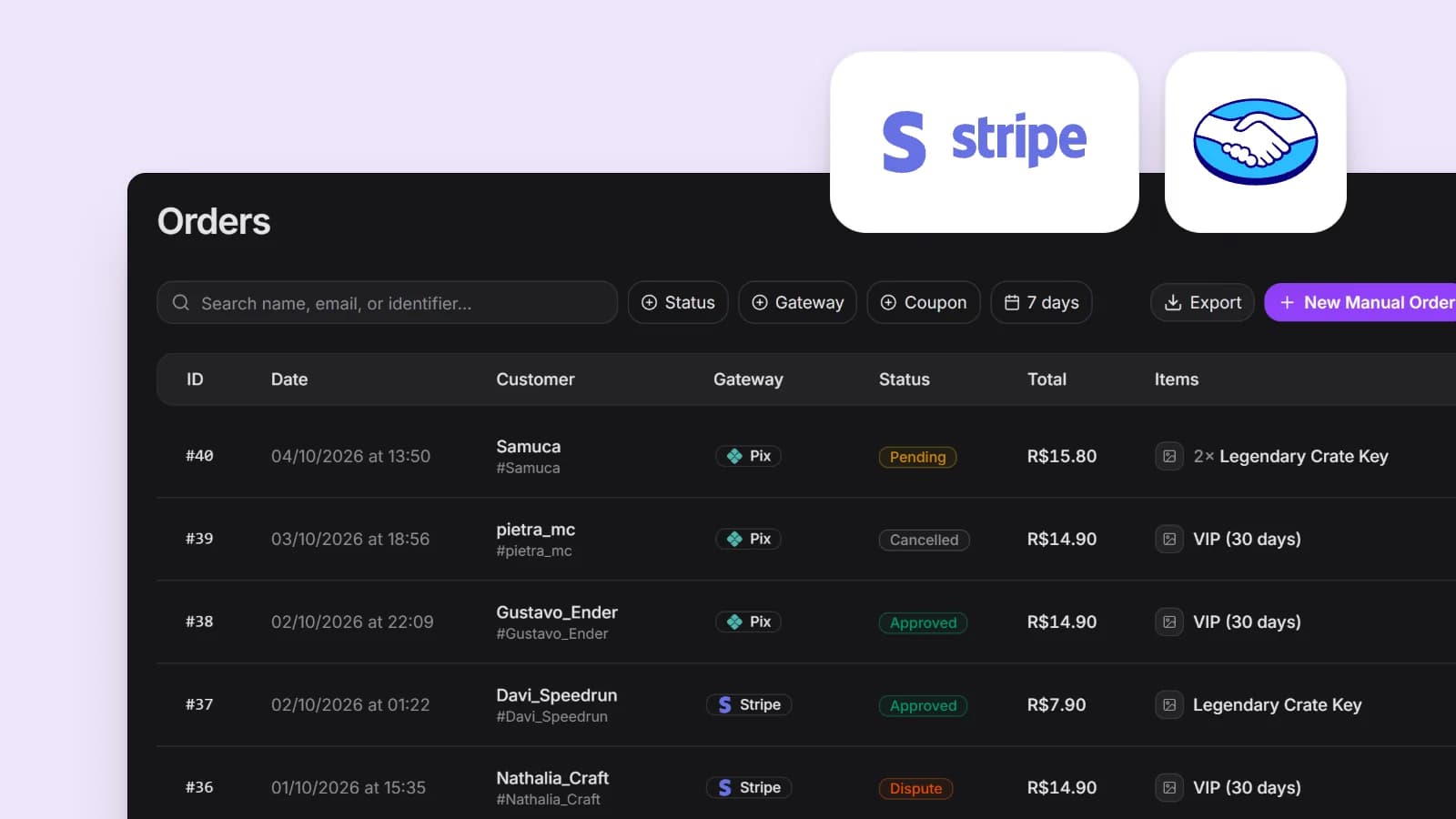
In Gamecart, the store currency is chosen when you create the store and can't be changed later, as the store creation guide explains. A server with a large Brazilian community may want a separate store in BRL, since Pix and Mercado Pago only work on BRL stores. That means a second catalog with its own prices to keep in sync.
A worked example with made-up numbers
A fictional survival server with about 60 players who log in every week:
| Item | Per month |
|---|---|
| Hosting | $40 |
| Paid plugins ($120 a year, spread over 12 months) | $10 |
| A stipend for the builder | $30 |
| Event reserve | $20 |
| Goal | $100 |
With a 10% margin for fees and refunds (an example figure, not your provider's rate), the goal becomes $110.
The owner sets VIP at $5 and VIP+ at $10, both for 30 days. One mix that covers it: 12 VIPs ($60) and 5 VIP+ ($50), for $110 in total.
That is 17 buyers out of 60 players, a bit more than a quarter. If that looks like a lot for your community, the options are cutting costs, lowering the goal, or raising VIP+ along with an extra perk. Lowering prices raises the number of buyers you need.
For a permanent VIP, the same owner would start from eight monthly payments: $40.
How to test a price
- Change one thing at a time: the price, the perks or the duration.
- Let each change run for a few weeks before judging it. A week with a holiday or a big event skews the comparison.
- Compare total revenue, not only the number of sales. Fewer sales at a higher price can bring in more.
- Write down the date of every change so you know what to compare.
- Players keep what they already paid for. A new price applies to the next purchase.
What to avoid
Skip the invented "was" price: "was $25, now $5" when the rank never sold for $25. A countdown that restarts on every visit and "only 3 left" on a digital rank with no limit belong in the same bin. So does a sale that never ends: if VIP is always 50% off, that is its price.
A server's players know each other and talk on Discord. One fake discount that gets exposed costs the trust that makes a player buy the next rank. In the US, the FTC's Guides Against Deceptive Pricing describe the same thing: when "an artificial, inflated price was established for the purpose of enabling the subsequent offer of a large reduction", the bargain being advertised "is a false one".
A real sale has a start and an end you stick to, and a former price that actually existed. Gamecart has coupons, and each product can be kept out of them, which helps when you want to discount one tier without touching the others.
Sources

About the author
Tanz
Founder of Gamecart, the store platform for Minecraft, Hytale, FiveM, and other game servers.
Open your server store
Create a free Gamecart store, connect your server, and deliver purchases automatically.